
103. Where Are You From?
- Jerome Kocher
- Sep 9, 2025
- 5 min read

I’m headed out to Slea Head on the tip of the peninsula to spend the night at an old Irish farmhouse. Breakfast will be served but not dinner. So I go into a grocery store to bring something with me. At the deli counter they had small savory pies, you know, like traditional steak and kidney. It gives you extra iron. Can’t be that bad. I ask the woman behind the counter if she has eaten this a lot. Her answer was “No, doesn’t exist where I come from.” “Where’s that?” She replies, “Spain, I’ve never eaten this in my life.” “Are there many Spanish here?” “Some, I came with friends.”
I buy the pie and a salad, then take the local bus west. One of the women at the bus stop knows me. How can that be? Yes, she was one of the twenty people at church on Sunday, out of a town of thousands. Only three of us get on the bus. One of them is Cyril, a local historian who travels around on his free public transportation card, available to everyone over 66. Every time someone steps on they have to talk with Brandon the bus driver. It’s an electric bus, but you’d think it’s fueled by Irish Craic - good willed conversation and banter.
The bus passes a very small primary school. For a while it was closed. Now it’s open with 14 students, all Ukrainian. My friend Kevin, the one who convinced me to swim in the Atlantic at 60 degrees, has three kids. His oldest at 17 is in a class that is 40% Ukrainian. Most everyone I spoke with though has positive feelings towards Ukrainian refugees.
When I arrive at the Irish farm with sheep and beehives I’m greeted by Barney. “Where are you from?” I ask. “Hungary. There my name is Barnabas, like St. Paul’s companion.” “So how did you get here?” “I applied online with ‘WorkAway.com.' “ I’ve worked in Cyprus, Crete, Sicily and now Ireland.” “Any other Hungarians here?” “Rarely, except for my girlfriend who also works here.”
This sheep farm has been in the family for generations. The owner’s father Sean was born here. But the new generation has turned stone walls, beehives and cute lambs into a destination, not only for accommodations, but “to hold a baby lamb.” People flock here. No pun intended. Costs only five dollars to hold a baby lamb. More, if you want to feed it a bottle. Pre tourism, the grandparents in this once impoverished rural landscape could never have imagined what a "gold mine" they sat on.
The night before I stayed at a Hostel. The young woman across from me was from Taiwan. “Are you concerned about mainland China?" I ask. “Not really. If there’s a problem I’ll just go to Canada.”
I walked into the lounge area and another young woman is on her computer speaking French. I asked her if she was working. And yes, she was teaching French online while traveling.
Last week I needed three buses to go overland to Dingle. But a delayed detour at Killarney stretched 4 1/2 into 6 hours. It was all for the better since I landed at the Tralee Bus Station. To pass the time I decided to talk to people there.
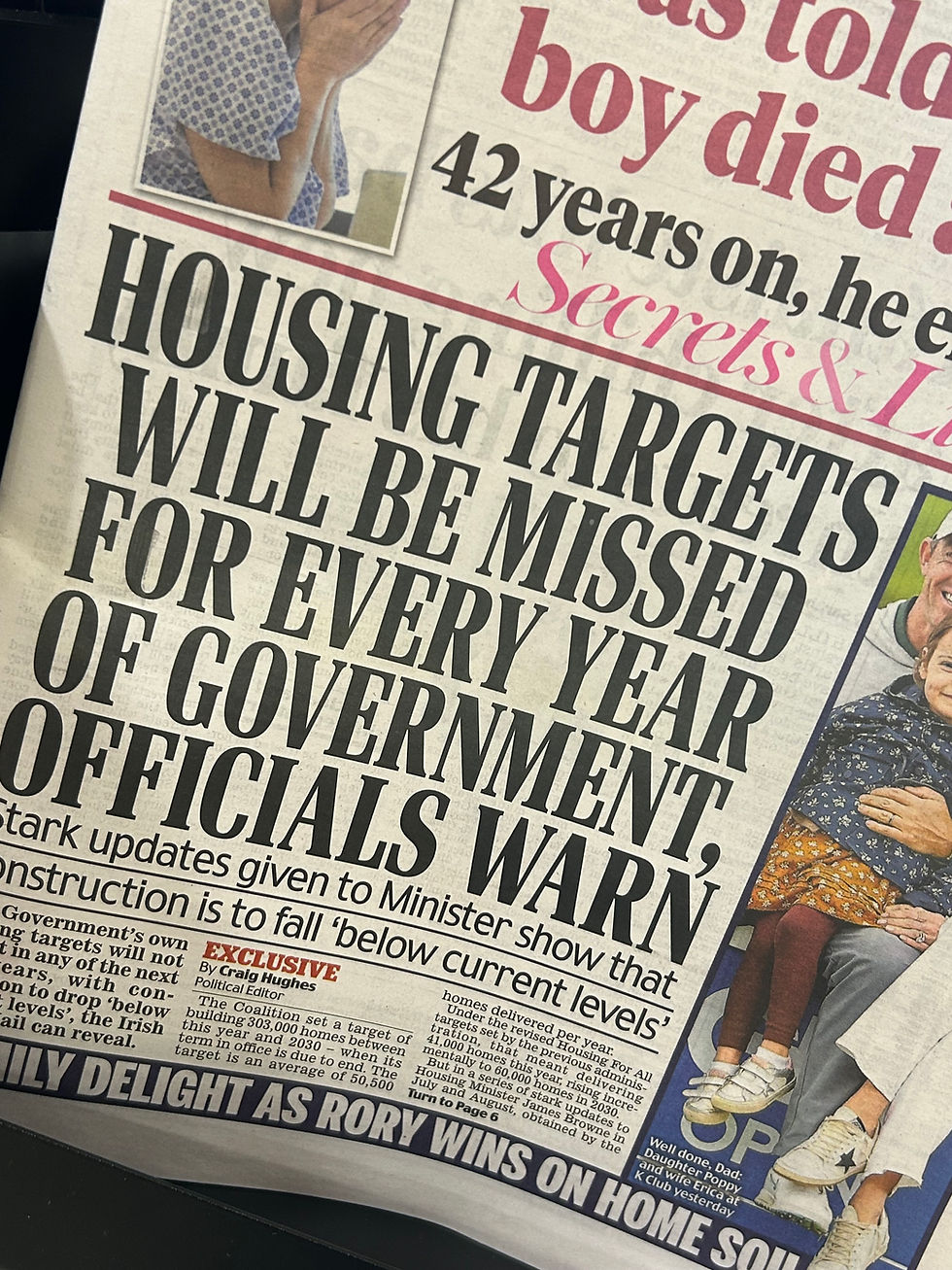
The woman next to me was maybe in her 40’s on her way to Banner. She wanted to rent a place in Tralee, but it was extremely hard. There was very little available. I asked her why. “Well, there are all these refugees who are being given housing by the government. Not much left. And they’re mostly able bodied young men. The New World Order is conspiring to destroy our country.” Then her bus arrived and she left.
I turned to the young man behind me and asked him where he’s from. He replied, “Slovakia. We came with our grandfather because he needed medical attention.” He put his earphones back on and returned to his gaming.
The security guard was apparently African with one of those million dollar smiles. So I went outside for fresh air. “Where are you from?” I asked. “Zimbabwe .” Hmm, I followed up with “How did you get here, was it hard to get a visa?” He had applied from Africa to work here as a health care worker. Bingo! Ireland needs some. So he came here four years ago with his family of four kids. But health care was too much stress, so after one year he switched to security guard.
I inquired that it must be boring but easy work at the bus station. Nothing much happens. He reminded me that was not the case at all. Just earlier he had to ask a drunk to leave and also clear out some junkies. Because of his work he doesn’t live in this town since too many people know him for the wrong reasons - being thrown out of the station. So he lives in the next town. Renting is also hard. His apartment costs about $1,000 US which for a family of five in the US is not bad at all. But he makes about $3,000 US a month, which means a third of his income is housing. He complimented my English, saying he could understand me better than the people who live here. Apparently I don’t have a strong Irish accent.
Finally my bus arrived and a non-Irish couple got on in front of me. “Where are you from?” He replied Stuttgart, Germany. We conversed a little in German until I remarked that if you’re going to Dingle it’s hard to find accommodation because of the marathon this weekend. All of Europe may be here. “Not really,” he said. “Not all, only about 3500 participants are allowed. And I’m one of them.” Uh, “So you are the problem!” He laughed in agreement.
One hour and 1500 sheep later, I arrived in Dingle which has mostly tourists and thousands of marathoners. Because of that I have to stay at five different places in six nights - above the Dingle pub, then at a seafood restaurant, a youth hostel, a B&B, and finally at the Old Irish Farm.
Regarding the woman’s earlier comments about fear of immigrants, I got a different perspective from Brandon the bus driver and Kevin at the B&B. Yes, some have resentment about government handouts to refugees resulting in lack of housing for locals. But the other truth is there's a shortage of 50,000 homes and to build those Ireland needs immigrants to work in construction. If you work in the “trades,” as an electrician, plumber or carpenter you not only have guaranteed work, but are well paid. In Ireland if you call a plumber, he will most likely speak Polish.
Because the Irish consider themselves brutally occupied by the British for centuries, Ireland feels a kinship with others countries that have likewise been “occupied.” Poland under Soviet communism and Ukraine by today’s Russia. Both fit that profile. Given that the former is traditionally Catholic and the latter Orthodox makes them an even better match.
On my way to another bus today I passed a woman walking a beautiful Siberian Husky, one eye blue, the other brown. I noticed she had less of an Irish accent than I. So I asked the obvious question. "Estonia," she replied. "I've been here 26 years." I didn't pursue any further because my bus would not wait. But it was a reminder that the Baltics are on my short list, And when I go there, someone can ask me "Where are you from?"


Comments